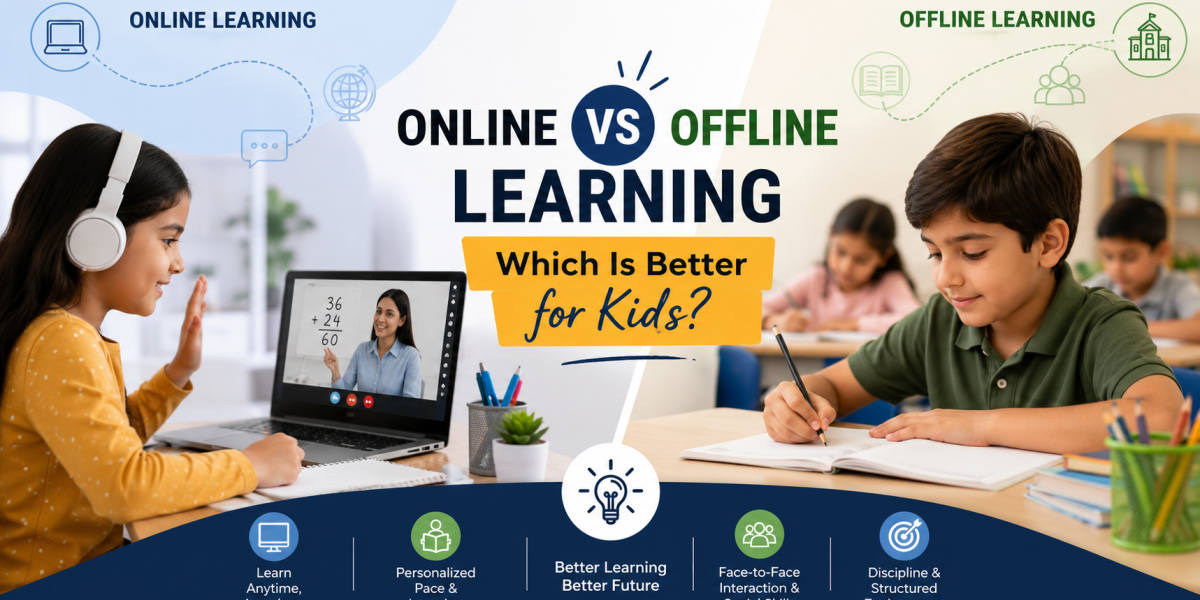
Education has evolved rapidly with the rise of digital technology. Today, parents have two main options for their children’s learning: traditional offline classes and online learning.
Both approaches have their advantages, but the best choice often depends on the child’s learning style and educational needs.
Let’s compare online and offline learning to understand their benefits.
Offline Learning (Traditional Classroom)
Advantages
Offline learning has been the standard method of education for decades.
Benefits include:
- Face-to-face interaction with teachers
- Classroom environment
- Social interaction with peers
- Structured schedule
These elements can help students develop communication and teamwork skills.
Online Learning
Online education has grown significantly in recent years because of its flexibility and accessibility.
Advantages
Online learning offers several benefits:
- Flexible Learning Schedule
Students can attend classes from anywhere, saving travel time. - Access to Expert Teachers
Online platforms allow students to learn from experienced instructors regardless of location. - Interactive Learning Tools
Digital platforms often include:
- Visual explanations
- Interactive exercises
- Practice quizzes
- Personalized Learning
Many online platforms provide customized learning paths based on the student’s progress.
Which One Is Better?
Both learning methods have strengths.
Offline learning provides:
- Social interaction
- Physical classroom experience
Online learning provides:
- Flexibility
- Access to resources
- Personalized education
For many students, a balanced approach combining both methods works best.
Conclusion
Education is no longer limited to traditional classrooms. Online learning has opened new opportunities for students to learn more effectively and conveniently.
Choosing the right learning method depends on the child’s needs, learning style, and access to quality education.